
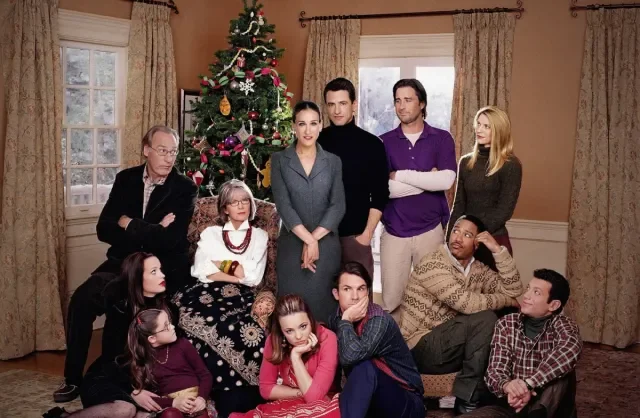
I am currently on a plane home to visit my parents, and some of my week’s sessions are going through my head. Namely, the feelings we all have as we head home and what the holidays will bring. Will we get along, will the election results ruin the converstation, will old regressed patterns come out?
All of these patterns are likely a potential, so what should we do about it.
This line of thinking is driven by one of my clients watching the movie, The Family Stone, while having ILF neurofeedback in my office this week. It is a classic and a holiday movie that can teach us about walls, enmeshment, family triangles and the patterns we bring to the table.
So, while on a plane and with the holidays are coming, I am pondering these family dynamics. If you feel some trepidation about the holidays already, you're not alone. I hear it in my office every November.
A quick refresher
In the 2005 film, Everett Stone, the eldest son, brings his girlfriend Meredith (Sarah Jessica Parker) home for Christmas, planning to propose. His loud, loving, opinionated family decides almost on sight that she's wrong for him. His mother, Sybil (Diane Keaton), won't give him his grandmother's ring, and his sister Amy (Rachel McAdams) makes no secret that she can't stand Meredith. By the end of the holiday, Everett has fallen for Meredith's sister Julie (Claire Danes), and Meredith has found her way to his brother Ben (Luke Wilson).
It's funny and heartbreaking. It's also a near-perfect picture of family boundary problems.
Walls and enmeshment
Pia Mellody and Terry Real describe healthy boundaries as what let us be connected and protected at the same time. When boundaries don't work, we tend to fall to one side or the other. We're either walled off, keeping everyone at arm's length, or enmeshed, so tangled up in each other that it's hard to tell where one person ends and the next begins.
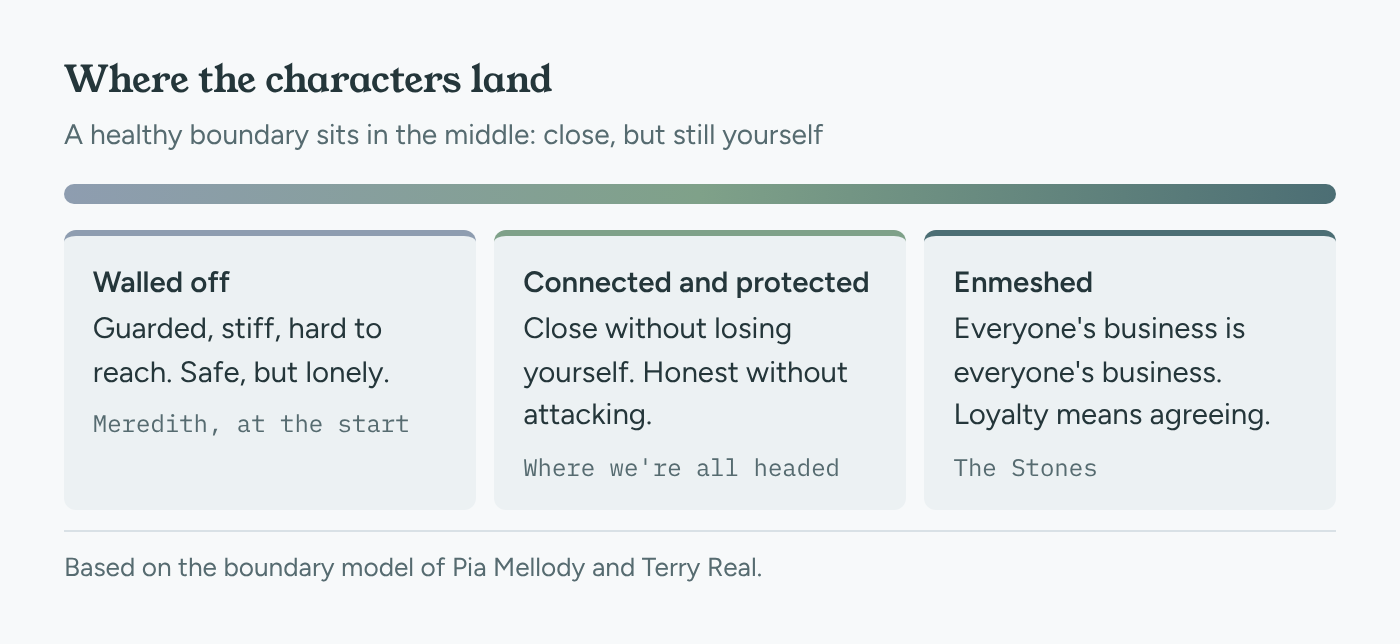
Meredith walks in with her armor on: polished, controlled and nervous. When the family pushes, she tightens. Walls protect us, but they also keep out the warmth we're longing for. Many of us learned this in homes where being careful was the safest way to get through dinner.
The Stones look like the opposite, warm and open. But look closer. Mom gets a say in whom her grown son marries. The siblings close ranks against the outsider. By the end, two brothers have paired off with two sisters, and relationships move around the family like furniture. There's real love here, but little room for difference. Being a Stone seems to mean thinking like a Stone.
The family triangle
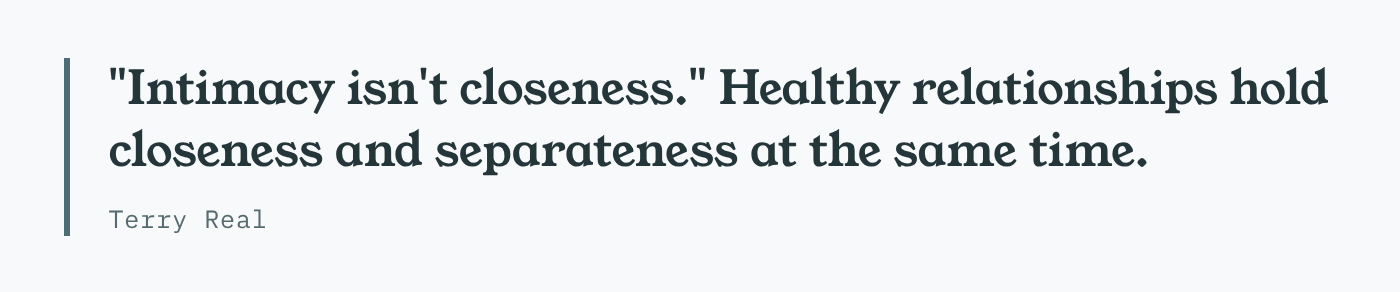
This was one of the biggest revolations of my adult life; when I learned about family triangles. Murray Bowen, who founded family systems theory, noticed that when two people feel tension, they rarely deal with it directly. They pull in a third person to ease the pressure. He called this a triangle. Once we're in one, we tend to slip into familiar roles: the victim, the persecutor and the hero who rushes in to rescue.
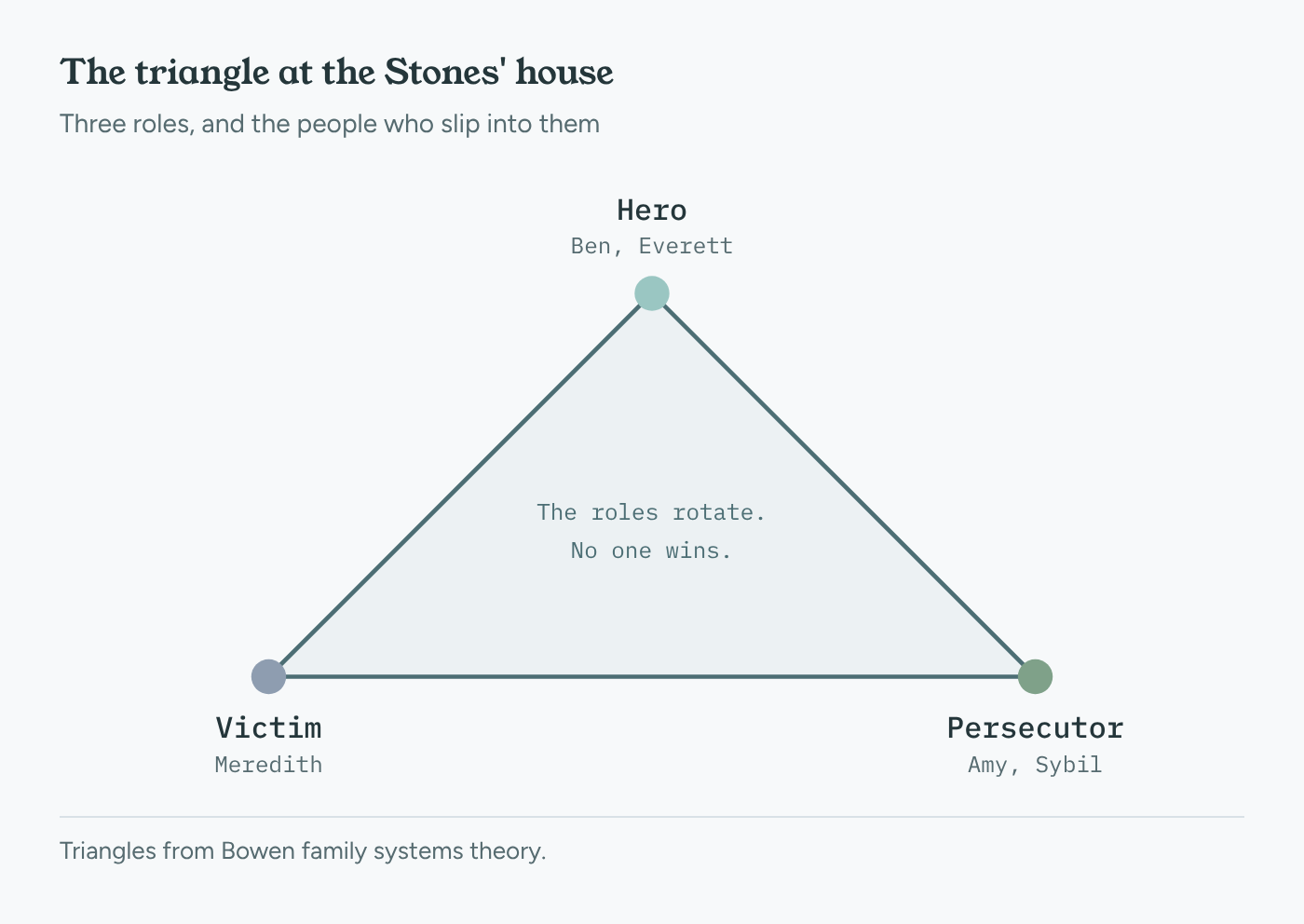
The Stones are full of triangles. Sybil and Amy work around Everett instead of talking to him, and he's stuck between his mother and the woman he brought home. Meredith feels attacked and pulls in Julie for backup. Ben plays the hero. Then the roles flip, and by Christmas Eve dinner Meredith is the one on the attack.
Triangles feel like relief in the moment, but they fracture all three relationships. The two people with the real problem never solve it, the third carries tension that was never theirs, and the same fight repeats year after year. Breaking them is one of the most important steps toward adult relationships that are close but boundaried. Talk to the person you have the issue with, and when someone pulls you in, kindly hand it back: "That sounds hard. Have you told her?"
Why November matters
In today's political and divisive world, a lot comes up at the holiday table. Remember the Stones' Christmas Eve dinner? One charged conversation, and the whole night blew up. That's why I think November is the perfect month for precycling: working through old hurts before they explode, so we don't fall back into old patterns in December.
Name your old role. Peacekeeper, rebel, fixer or quiet one? Notice which version of you shows up at home.
Spot your triggers. Which topics, tones or people send you back to old patterns? Write them down while you're calm.
Feel it now. Let the grief, anger or worry move this month, with a friend, a journal or a therapist, so it isn't driving in December.
Step out of the triangle. Notice when you're pulled in as the go-between or the hero, and send the conversation back where it belongs.
Choose your boundary and your exit. Decide what you'll talk about, what you won't and how long you'll stay. A walk or a break is how you stay connected and protected.
When we do our own work, we stop showing up as the child we used to be and start showing up as the adult we are now. That's where authentic adult relationships become possible, even with family.
Something to sit with
Which old pattern would you most like to leave at the door this year?
Hold onto your answer. It's the best place to start.
Want support before the holidays? I'd love to help you sort through your family patterns and walk into this season feeling steadier. Book a free consult or make an appointment today.
This post is for education and is not a substitute for therapy or medical care.
References
Bezucha, T. (Director). (2005). The family stone [Film]. 20th Century Fox.
Kerr, M. E., & Bowen, M. (1988). Family evaluation: An approach based on Bowen theory. W. W. Norton.
Mellody, P., Miller, A. W., & Miller, J. K. (1989). Facing codependence: What it is, where it comes from, how it sabotages our lives. Harper & Row.
Real, T. (2022). Us: Getting past you and me to build a more loving relationship. Goop Press.e to build a more loving relationship. Goop Press.
