
Why understanding the body is critical for caring for the mind!
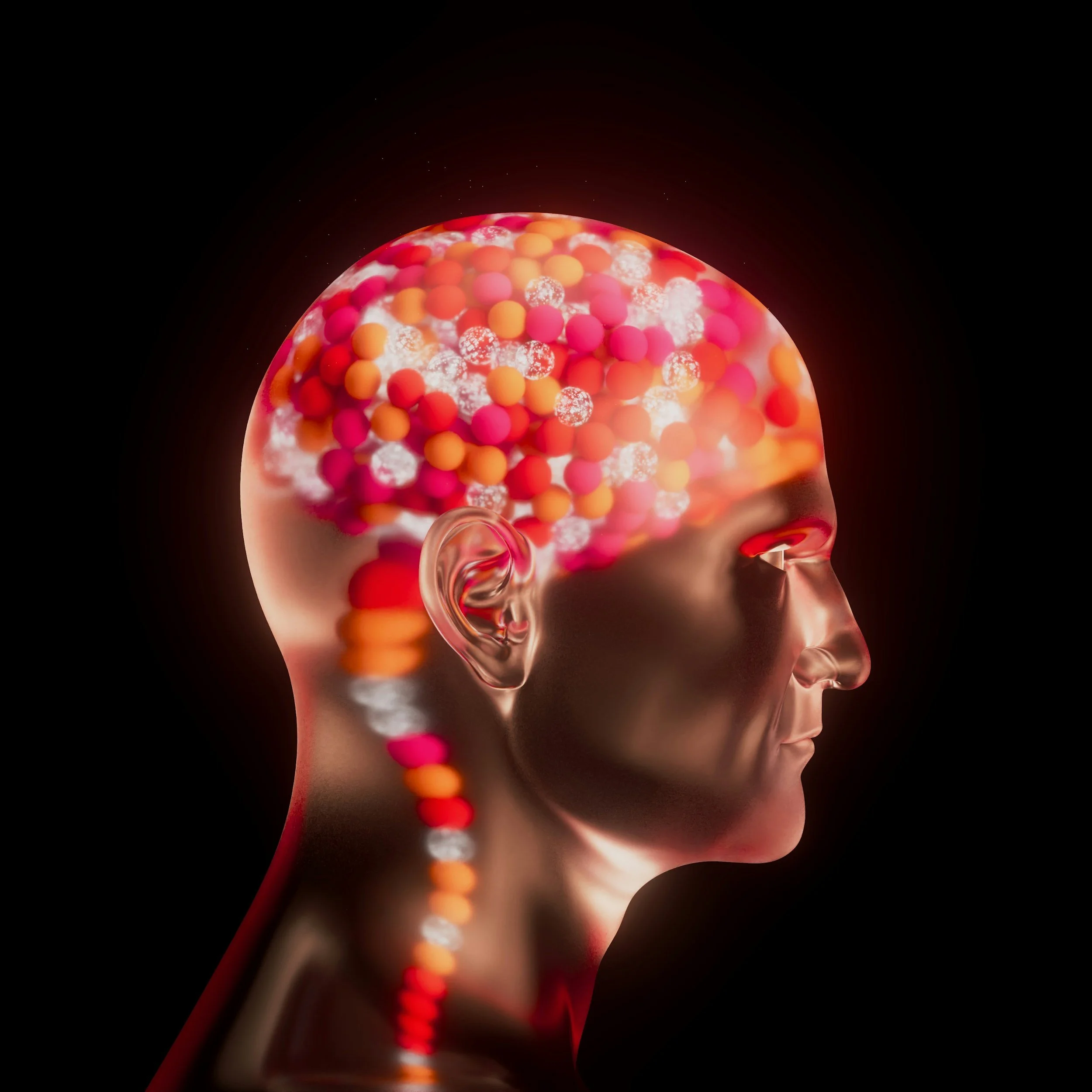
Many clinicians are taught that depression and anxiety come from a "chemical imbalance" in the brain. That story is changing. More and more research points to something that lives in the whole body: chronic inflammation.
Dr. Austin Perlmutter wrote a recent article that captures what I have been working on for a few years now. He explains this well in his Psychology Today article, "How Inflammation Affects Your Mental Health." His work builds on a message his father, neurologist Dr. David Perlmutter, shared years ago in his book Brain Maker. And it is the same message at the heart of the Synchrony Method.
Inflammation: helpful, until it isn't
Inflammation is how your body heals. It fights infection and repairs injuries. The problem comes when it never fully turns off. That quiet, ongoing inflammation is the kind linked to mental health struggles.
Dr. Perlmutter points to a large study of more than half a million people. Those with higher inflammation in their blood were more likely to be diagnosed with a mental health condition. He also walks through how inflammation connects to:
Depression. Inflammatory messengers can reach the brain, disrupt serotonin, keep the stress system switched on, and lower the brain's ability to grow and adapt.
Anxiety and PTSD. Inflammation is linked to a more reactive amygdala, the brain's alarm system. When that alarm stays on, worry and fear take over.
Bipolar disorder and schizophrenia. Higher inflammation has been found in people with both.
Inflammation isn't the only cause of these conditions. People are more complex than that. But we can't ignore the body when we're trying to help the mind.
It often starts in the gut
In Brain Maker, Dr. David Perlmutter made a bold case: the health of your brain is tied to the health of your gut. The trillions of microbes in your digestive system help guide your immune system and talk directly to your brain.
When that system is thrown off by sugar, processed food, stress, poor sleep, or too many antibiotics, the gut lining weakens and the immune system stays on alert. The result is inflammation the brain can feel. His answer was simple: eat more fiber-rich plants and fermented foods, cut back on sugar and refined carbs, and protect your gut. It is meaningful to see his son now carrying the same idea forward, with even more research behind it.
What about GLP-1 medications?
Dr. Austin Perlmutter notes that GLP-1 drugs like semaglutide and tirzepatide may lower inflammation, which may help explain why some people taking them have seen their depression improve.
I want to be fair. These effects are real and interesting, and for some people with serious medical needs, these drugs can be an important tool. I respect the doctors who prescribe them with care. But, we all know this is not the motivation of most using these drugs, but the risk are not being talked about enough, and I see them firsthand in my practice.
From what I have seen in my own practice, the risks are too high for most people:
Muscle loss (sarcopenia). A large share of the weight lost on these drugs can be muscle, not just fat. Muscle is one of the body's best tools for balancing blood sugar and calming inflammation. Losing it works against the very health we are trying to build.
Gallbladder and gut problems. These drugs raise the risk of gallstones and gallbladder disease. I have personally seen patients lose their gallbladders while taking them.
So while I value what GLP-1s are teaching us, I don't believe the trade-off is worth it for most of the people I serve. If you are taking one now, please talk with your prescriber before making any changes.
The better path: food, lifestyle, and your stress response system.
The good news is that the most powerful tools are already in our hands. Dr. Austin Perlmutter sums them up as the "6 S's”, I like to add one additional: Stress Response.
Stress: breathing, mindfulness, time in nature, less news and social media, and therapy
Sugar: fewer sugary drinks and processed foods, more fiber
Sedentary living: move daily and add strength training a few times a week
Sleep: a cool, dark, quiet room with no screens
Substances: keep alcohol low
Smoke: cleaner air at home
Stress Response: Stress tells our liver to release glucose for flight, chronic activiation is linked to inflammation.
This path does what a pill or drug can't. It builds muscle instead of losing it. It feeds the gut instead of bypassing it or desimating it and wiping out our mineral stores. And it changes the habits that started the fire in the first place.
Why inflammation is at the center of the Synchrony Method
In our work, inflammation is one of the main bridges between body and mind. Trauma, chronic stress, poor sleep, and processed food all feed the same fire, and that fire shows up as anxiety, depression, brain fog, and feeling stuck.
The Synchrony Method focuses on calming that fire through food, movement, sleep, stress care, and gut health. When we pair this with clinical psychotherapy, the change can be dramatic. People are no longer trying to heal emotionally while their body works against them. Their mood lifts, sleep returns, energy comes back, and their relationships, work, and sense of self begin to shift.
I see lives changing every week. It is humbling to witness, and it is why I do this work.
A final thought
The science is still growing, and none of us has every answer. But the direction is clear: the mind and body are one system. Care for the body gently and consistently, and you give the mind its best chance to heal.
If you are ready to explore what this could look like for you, I would be honored to walk with you.
This article is for education only and is not medical advice. Please talk with your healthcare provider before starting, stopping, or changing any medication.
References
Perlmutter, Austin. "How Inflammation Affects Your Mental Health." Psychology Today, June 2024. https://library.fabresearch.org/viewItem.php?id=16313
Perlmutter, David, with Kristin Loberg. Brain Maker. Little, Brown, 2015.
Review of muscle loss and gallbladder risk with semaglutide and tirzepatide. Reviews in Endocrine and Metabolic Disorders, 2025. https://link.springer.com/10.1007/s11154-025-09967-4
