

Why We Love the Way We Do: Attachment, Anxiety, and Breaking the Cycle
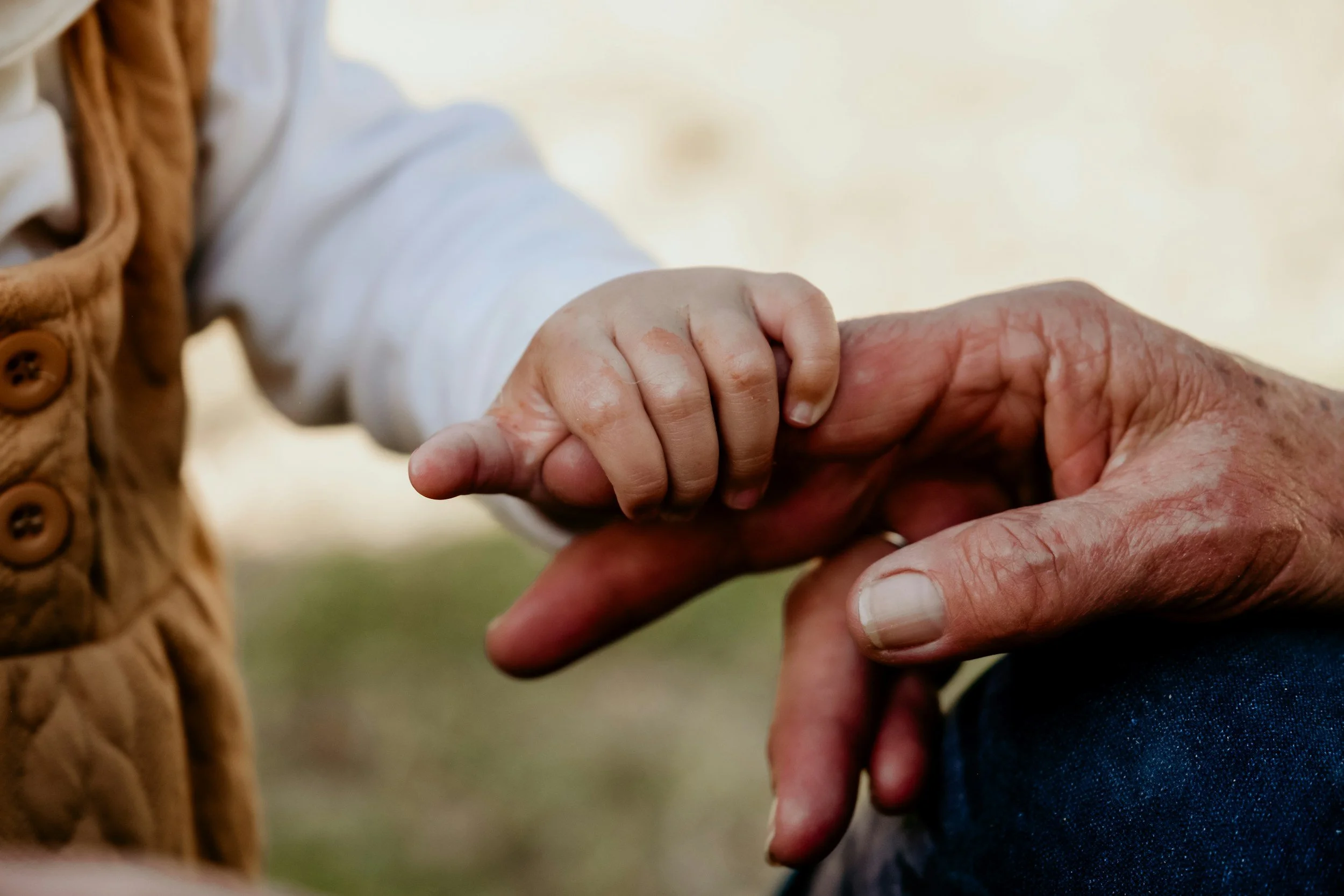
Most of us think of anxiety and depression as something that happens inside us. A chemical issue, a personality flaw, a private weather system we just have to wait out. But a lot of the time, the roots run through our relationships, and they go back further than we realize. They start with how we first learned to connect.
That early learning has a name. It is called attachment, and understanding it changes how you see almost every relationship you have.
What attachment actually is
When we are young, we are wired to bond with whoever takes care of us. Their job, biologically speaking, is to keep us safe and to help us calm down when we are upset. A baby cannot regulate its own nervous system. It borrows a calm one from an adult. Over thousands of small moments, getting picked up, getting soothed, getting ignored, getting frightened, we form a blueprint for what closeness feels like and whether other people can be trusted to show up.
Daniel Siegel, in The Developing Mind, describes this beautifully. The brain is not built in isolation. It is built in relationship. The way a caregiver tunes in to a child, what Siegel calls attunement, literally shapes the parts of the brain responsible for managing emotion and stress. We do not just learn ideas about relationships. We get wired by them.
The four patterns
In Attached, Amir Levine and Rachel Heller take this research and make it practical for adults. Annette Kussin's It’s Attachment does the same for everyday relationships. Both describe a few core patterns, and you will probably recognize yourself in one of them.
Secure. You are comfortable being close and comfortable being on your own. You can ask for what you need without it feeling like a crisis. About half of people land here.
Anxious. You crave closeness but live with a low hum of fear that you will lose it. Small signals get amplified. A late text, a flat tone, and your nervous system is already bracing for abandonment.
Avoidant. You value independence so highly that closeness starts to feel like a threat. When things get emotionally intense, your instinct is to create distance, to pull back, to handle it alone.
Disorganized. This is the hardest one. It usually grows out of early environments where the very person you needed for comfort was also a source of fear. You want closeness and you fear it at the same time, and the result is a confusing push and pull.
None of these are character verdicts. They are survival strategies that made sense at the time. You adapted beautifully to your environment and learned the best way to get love, sometimes it just came at a cost to you and your nervous system.
What an attachment injury is
An attachment injury is a specific wound to that bond of trust. It is the moment you reached for someone and they were not there, or worse, they were the danger. It can be one big rupture or a thousand small ones. A parent who was unpredictable. A caregiver who was physically present but emotionally absent. A partner who broke a promise at the exact moment you were most exposed.
The injury is not just the event. It is the lesson the nervous system takes from it. The lesson sounds something like I cannot count on people, or my needs are too much, or closeness is not safe. That lesson then runs quietly in the background for years.
Where anxiety and depression come in
Here is the link people often miss.
Anxious attachment and anxiety share the same engine. The nervous system stays on high alert, scanning for signs of rejection. That hypervigilance is exhausting, and over time it can harden into generalized anxiety. The worry is not really about the late text. It is about the old fear underneath it.
Avoidant attachment connects more often to depression. When you have spent a lifetime suppressing your need for others and managing everything alone, you end up cut off from one of the main things that helps humans feel okay, which is genuine support. Isolation and emotional shutdown are fertile ground for depression.
And because early attachment shapes the brain's stress system, as Siegel describes, insecure attachment can leave that system poorly regulated from the start. You are not weak. You are running on hardware that was set up under difficult conditions.
Security can be earned
This is the part that matters most, so I want to be clear about it. Your attachment style is not a life sentence, though it is a big predictor of how your relationships will go and how they need to heal.
Researchers use the term earned secure attachment. It means people who did not grow up secure but became secure later, usually through a relationship that consistently proved their old lessons wrong. A partner, a close friend, or a good therapist who shows up, stays steady, and repairs things when they go sideways.
Levine and Heller point out something hopeful here. Secure partners tend to bring out the best in insecure ones. Being with someone who is steady and responsive can slowly retrain your nervous system to expect safety instead of threat. Siegel adds the inner piece. People who make sense of their own story, who can look honestly at what happened to them and tell it as a coherent narrative, tend to move toward security. Healing is not erasing the past. It is making sense of it, healing from it and moving on to more loving connected relationships in love, business, and friendship.
Why relational skills are the real work
A safe relationship helps, but it is not magic. The actual healing happens through repeated practice of a few unglamorous skills.
Saying what you need clearly, before you boil over. Noticing when your old alarm is going off and naming it instead of acting it out. Tolerating closeness when your instinct is to flee, and tolerating space when your instinct is to cling. And above all, repair. Every relationship has ruptures. Secure ones are not the ones without conflict. They are the ones where people who turn toward the relationship during disharmony, and see repair as a natural part of closeness. They seek repair to re-estabilish homeostasis rather than flee from it, fight it, or freeze it out. The trick is to identify how you react and shift from disharmonizing fight, flight or freeze, and always move to repair quickly.
These skills feel awkward at first because they contradict your blueprint, based on your attachment style set very early on in life and carried into adulthood. That awkwardness is not a sign you are doing it wrong. It is the sign you are rewiring something. Long term happiness is built far more out of this kind of practice than out of finding the perfect person.
Breaking the cycle for your kids
If you are a parent, attachment is also the inheritance you are handing down right now.
The good news from the research is striking. The single best predictor of whether a child will be securely attached is not whether the parent had a perfect childhood. It is whether the parent has made sense of their own. A parent who has done that inner work can offer a child what Siegel and others describe simply: a child needs to feel safe, seen, soothed, and secure. You do not have to be perfect. You have to be present, show up, and you have to repair when you mess up, because you will.
This is how cycles actually break. Not through guilt, but through awareness.
When the wound is older than you
Sometimes the pattern goes back further than your own childhood. In It Didn't Start With You, Mark Wolynn makes the case that trauma can travel down through generations. The fear, the silence, the way a family does or does not talk about pain, all of it can get passed along, often without anyone choosing it.
Wolynn's point is practical and oddly freeing. The patterns you are carrying may not have started with you. A grandparent's loss, a parent's unspoken grief, a survival strategy from a time of real danger, these can echo forward into how you love and worry today. All of these leave an imprint epigenetically on our family members and the way they feel and function. Naming them, seeing where they came from, loosens their grip. You stop unconsciously repeating a story and start consciously writing a new one.
That is the whole project, really. You inherited a way of connecting. You did not choose it. But once you can see it, you get a say in what you pass on.
The takeaway
Attachment is not about blaming your parents or pathologizing your relationships. It is about understanding the blueprint you were handed and recognizing that blueprints can be redrawn. Anxiety and depression are often signals from an old wound, not permanent facts about who you are. It is far from black and white, good or bad. With safe relationships, honest reflection, and the steady practice of real relational skills, security can be earned, and the cycle can end with you.
References
Levine, Amir, and Rachel S. F. Heller. Attached: The New Science of Adult Attachment and How It Can Help You Find and Keep Love. TarcherPerigee (Penguin), 2010.
Kussin, Annette. It's Attachment: A New Way of Understanding Yourself and Your Relationships. Guernica Editions (MiroLand), 2020.
Siegel, Daniel J. The Developing Mind: How Relationships and the Brain Interact to Shape Who We Are. 3rd ed. Guilford Press, 2020. (1st ed. 1999.)
Wolynn, Mark. It Didn't Start with You: How Inherited Family Trauma Shapes Who We Are and How to End the Cycle. Viking (Penguin), 2016.
This article is for education and reflection, not a substitute for professional care. If you are struggling with anxiety, depression, or the effects of trauma, working with a qualified therapist can make a real difference, and reaching out is a sign of strength.
