

The Foundations of Self-Empowered Health: A Whole-Person Approach to Mental Well-Being
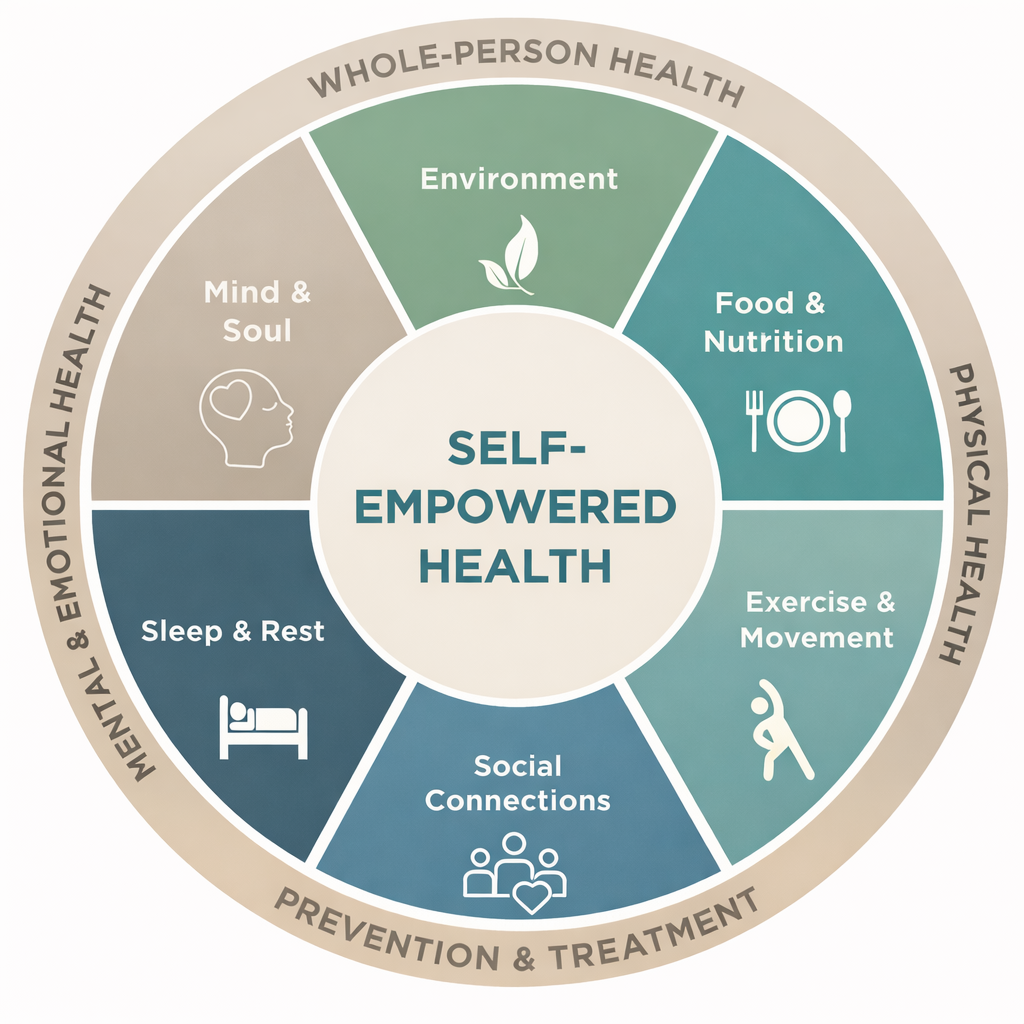
Mental health is often discussed in purely psychological terms, yet lasting change rarely occurs when we focus on thoughts and emotions alone. A whole-person model recognizes that mental well-being is shaped by biological, environmental, relational, and lifestyle factors that continually influence the brain and nervous system.
The framework illustrated above reflects an integrative perspective on health — one that considers environment, nutrition, movement, sleep, social connection, and inner emotional life as interconnected elements supporting overall mental wellness.
A Whole-Body View of Mental Health
Each area represented within this model plays a meaningful role in emotional and cognitive functioning.
Environment
The nervous system responds continuously to external conditions, including physical surroundings, daily demands, and chronic stress exposure. Supportive environments promote regulation and resilience, while ongoing stressors can contribute to physiological strain and inflammatory processes.
Food and Nutrition
Nutrition influences neurotransmitter production, metabolic health, and gut–brain communication. Balanced blood sugar and nutrient density are increasingly recognized as foundational components of emotional stability and cognitive clarity.
Exercise and Movement
Regular movement supports circulation, regulates stress hormones, and enhances neuroplasticity — the brain’s ability to adapt and recover. Movement practices do not need to be extreme; consistent, intentional activity can significantly support mood regulation and overall well-being.
Social Connections
Healthy relationships play a central role in nervous system regulation. Connection fosters safety, belonging, and emotional processing, while chronic isolation can amplify stress responses and negatively affect mental health outcomes.
Sleep and Rest
Sleep is essential for neurological repair, emotional integration, and metabolic balance. Disruptions in sleep patterns are strongly associated with increased inflammation, impaired insulin signaling, and reduced capacity for emotional regulation.
Mind and Inner Life
Self-awareness, emotional processing, and meaning-making contribute to resilience and psychological growth. Therapeutic work, reflective practices, and mindful awareness help individuals understand deeper patterns that influence behavior and well-being.
Together, these domains illustrate that mental health is not a single pathway but a dynamic system in which each element influences the others.
Inflammation, Insulin Resistance, and Brain Function
An emerging area of integrative mental health research focuses on the role of inflammation in emotional and cognitive functioning. Chronic stress, disrupted sleep, poor nutrition, and environmental strain can contribute to low-grade systemic inflammation that extends beyond the body and into the brain.
Inflammation may influence mental health through several mechanisms:
Altered neurotransmitter activity, affecting mood and motivation
Disruption of insulin signaling in the brain, contributing to insulin resistance
Increased neuroinflammatory responses that can affect focus, memory, and emotional regulation
When insulin signaling becomes impaired, the brain’s ability to efficiently use glucose for energy may decline. This can manifest as fatigue, brain fog, and fluctuations in mood or concentration. While mental health challenges are multifaceted, understanding these biological contributors helps expand the possibilities for effective, integrative care.
A Self-Empowered Approach to Healing
A whole-person framework does not aim for perfection; rather, it emphasizes awareness and sustainable change. Small, intentional shifts across multiple areas of life can create meaningful improvements in mental health:
Supporting metabolic balance through nutrition
Prioritizing restorative sleep
Strengthening social connection and relational safety
Addressing underlying emotional patterns through psychotherapy
Cultivating environments that promote calm and stability
When these elements begin to align, individuals often experience greater clarity, resilience, and a renewed sense of agency in their well-being.
Integrating Mind, Body, and Context
Mental health is shaped by the complex interaction between biology, psychology, lifestyle, and environment. By viewing wellness through a whole-person lens, therapy and integrative health practices can move beyond symptom management toward deeper, more sustainable transformation.
This model of self-empowered health reflects a shift toward understanding mental wellness as an integrated process — one that honors the interconnected nature of body, mind, and lived experience.
📍 Tara Trebesch, ACMHC, CN, IHP, CFA
Integrative Health & Psychotherapy
Park City, Utah | taratrebesch.com
