

When Grief Comes in Waves: Finding Our Way Through Together
Community is the great antidote to grief.
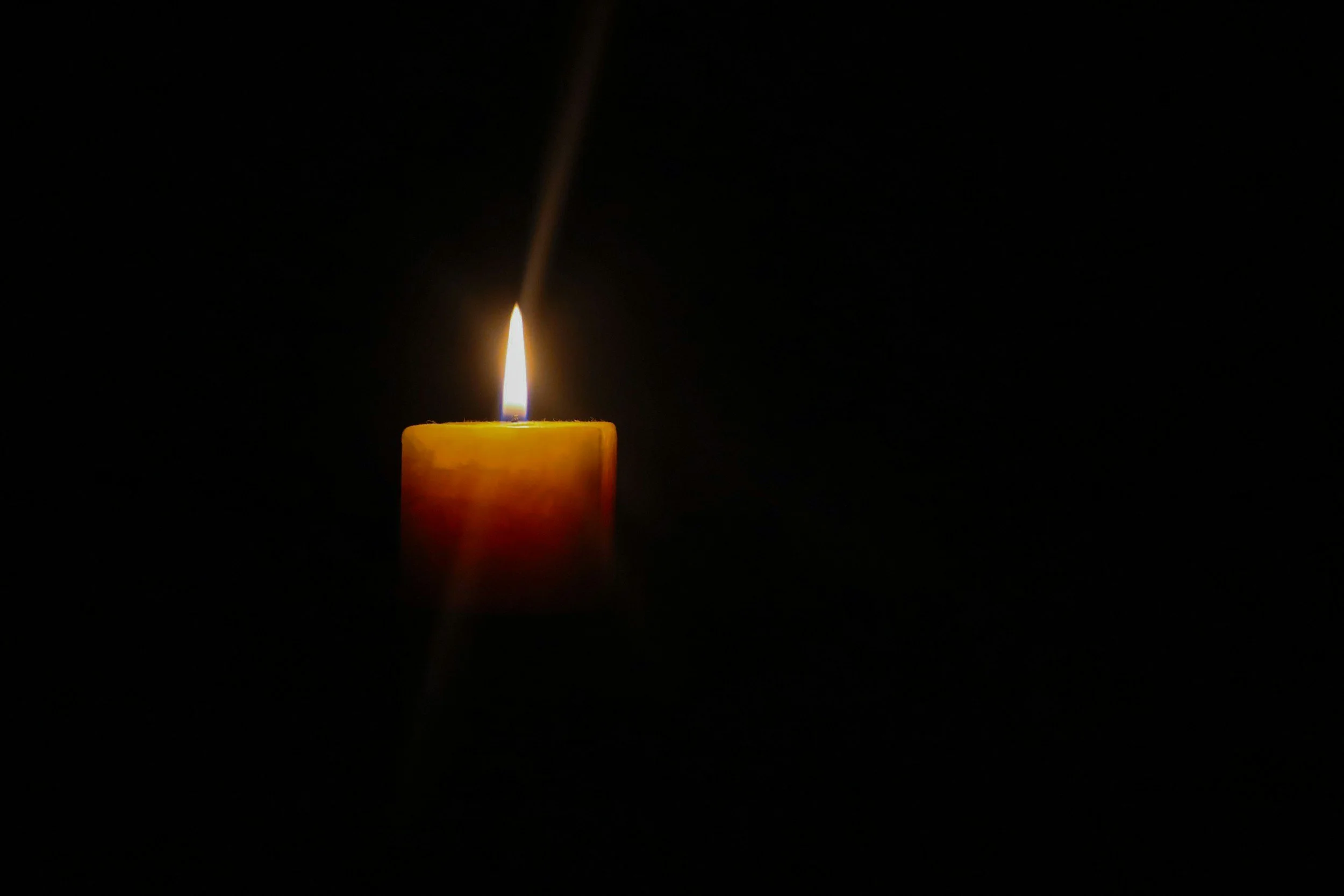
There is a moment many of us know without ever having words for it. You are standing in the cereal aisle, a text from the doctor, or driving home from somewhere ordinary, and suddenly the air shifts. A song. A scent. The particular way the light is falling through the windshield. And just like that, you are not in the grocery store anymore. You are in your grandmother's kitchen. Or sitting beside a hospital bed. Or holding a hand that is no longer here.
Grief does that. It does not ask permission. It does not check the calendar. It arrives, often, when we have just begun to feel steady again.
The Many Faces of Loss
When we hear the word grief, most of us picture funerals and black clothing and the loss of someone we loved deeply. And yes, that is grief. But it is only one of its many faces.
Francis Weller, in his beautiful book The Wild Edge of Sorrow, describes what he calls the five gates of grief. He reminds us that we grieve not only the people we have lost, but also the places that no longer exist as we knew them, the parts of ourselves we had to leave behind to survive, the ancestral pain we carry without ever being told about it, and the sorrows of the world that press in on us through the news, through the seasons, through simply being alive and paying attention.
Elisabeth Kübler-Ross, who spent her life sitting beside the dying and their families, wrote in On Death and Dying and her later work that grief is never a tidy progression through stages. The five stages she described were never meant to be a checklist. They are more like weather patterns that move through us, sometimes circling back, sometimes arriving all at once.
And then there is the particular grief that Alexander Levy wrote about in The Orphaned Adult. There is something specific about losing a parent in midlife. You become, suddenly, the older generation. The buffer between you and your own mortality is gone. Even adults in their fifties and sixties can find themselves feeling, in his words, strangely orphaned, regardless of how complicated or beautiful the relationship was.
There is also the grief that comes without a death at all. The end of a marriage. A child leaving home. A diagnosis. A friendship that quietly faded. A version of the future you had imagined that will no longer happen. These losses count. They deserve to be mourned.
Why Grief Returns When We Least Expect It
If you have ever wondered why a perfume in a stranger's wake can undo you, or why a certain song on the radio can stop you in your tracks years after a loss, you are not imagining things. There is a real reason for this.
Dan Siegel, in his work on the developing mind, has written about how memory is woven most deeply through emotion and sensory experience. As he puts it, "Memory is the way past events affect future function." Smell in particular has a direct line to the limbic system, the emotional center of the brain. This is why a whiff of pipe tobacco or the smell of a certain hand lotion can bring back, in vivid detail, someone you have not seen in twenty years.
In these unexpected moments, life can feel suddenly overwhelming. One minute you are functional and the next you are weeping in your car, and there is nothing wrong with you. This is grief doing what grief does. It is moving through you. It is reminding you that love leaves a permanent imprint.
What the Body Holds
Grief is not only an emotion. It is a felt experience, lived in the body.
In traditional Eastern medicine, grief is said to be held in the lungs. Practitioners have observed for centuries that the lung meridian carries the energy of letting go, and that unresolved grief can show up as shortness of breath, a tightness across the chest, a heaviness in the shoulders, or even an increase in asthma symptoms. Many people in deep grief describe a feeling of a band around their chest, or a lump in their throat that will not dissolve, or a stiff and aching neck.
The body knows. Long before our minds can put words to what we are feeling, our breath becomes shallow. Our jaw clenches. Our shoulders climb toward our ears. If you notice these things in yourself during a season of loss, gentleness with your body is part of the work. Slow walks. Warm baths. Long exhales. Letting yourself cry when the tears come, rather than swallowing them back down.
James Lynch, in The Broken Heart, wrote movingly about the physical cost of unprocessed grief and loneliness. As he observed, "There is a biological basis for our need to form human relationships. If we fail to fulfill that need, our health is in peril." Grief held alone can quite literally weigh on the heart.
Letting the Wave Move Through
There is an old wisdom in the image of grief as a wave. When we try to brace against a wave, we get knocked down. When we try to outrun it, it catches us anyway. But when we soften, when we let our knees bend and let ourselves be moved by it, we discover something. The wave passes. It always passes. And then there is breath again. And then there is quiet again. And eventually, sometimes, even laughter. This also goes for crying. Crying has a crescendo and falls again. Embrace this and grief will not continue to grip you so tightly.
Allowing grief to move through you like a wave is one of the most flexible and resilient things you can do. It does not mean you have to perform sadness or wallow in it. It means you stop holding it back. You let it rise when it rises. You let it recede when it recedes. You trust that it will not destroy you, even when it feels like it might.
This is not weakness. This is one of the most courageous things a human being can do.
The Medicine of Community
Here is something we know from every tradition that has thought carefully about loss. We were never meant to grieve alone.
In Jewish tradition, when a loved one dies, the community gathers for shiva, the seven days of mourning. The grieving family does not cook. They do not host. They do not have to be okay. Friends and neighbors come to them, bringing food, sitting in silence, sharing memories, simply being present. The mourner is held by their community in a structured, time-honored way. Mirrors are sometimes covered. Conversation often centers on the person who has died. The bereaved is not expected to perform recovery.
Many ancient cultures have versions of this. The Irish wake. The Mexican Día de los Muertos. The forty days of mourning in Eastern Orthodox tradition. The collective wailing rituals of various Indigenous peoples around the world. Across continents and centuries, humans have understood something modern Western culture has largely forgotten. Grief needs witnesses. Grief needs containers. Grief needs other hands.
Modern Western life has thinned out many of these structures. Extended families live far apart. Church attendance has declined in many communities. Workplaces often expect us to be back at our desks within days. There is a quiet, almost unspoken pressure to grieve quickly and privately and then return to productivity. This is not how human beings are designed to metabolize loss.
So if you find yourself grieving in this kind of world, please know this. You are not failing. You are simply trying to do something hard in a culture that has forgotten how to help you do it.
This is why finding your people matters so much. Family, if family is safe and present. A few trusted friends who will let you say the same thing one hundred times. A faith community, if that resonates. A grief support group, where the simple act of being in a room with others who understand can be more healing than almost anything else. A therapist who knows how to sit with sorrow.
Awareness of your need, and the willingness to reach for support, is not weakness. It is wisdom. It is honoring grief with love and connection, which is the only real way through the largeness of these waves.
A Note for Anyone Reading This in the Middle of It
If you are grieving right now, in any form, I want you to hear this. There is nothing wrong with you. Your timeline is not too slow. Your sadness is not too much. Your good days do not mean you have forgotten. Your hard days do not mean you are going backward.
You are doing one of the most human things a person can do. You are loving someone or something across an impossible distance. That is sacred work. Be tender with yourself. Reach for the hands that are reaching for you. Breathe into the tight places in your chest. And know that you are not, and have never been, alone in this.
Grief Support Resources in Utah
If you are looking for a group or a place to begin, here are some trusted options.
Caring Connections — University of Utah College of Nursing Eight-week grief support groups offered quarterly, both in person and online. Specialized groups for different types of loss. Scholarships available through Larkin Mortuary. Phone: 801-585-9522 Website: nursing.utah.edu/grief-support-groups
The Sharing Place A wonderful nonprofit serving children, teens, and their families through grief. Locations in Millcreek, Taylorsville, Pleasant Grove, and St. George. Phone: 801-466-6730 Website: thesharingplace.org
Jewish Family Service of Utah Offers a free Pre-Loss Grief Group for caregivers and other support services. Open to people of all backgrounds, not only the Jewish community. Phone: 801-746-4334 Website: jfsutah.org
GriefShare — Salt Lake City and surrounding areas Faith-based weekly grief recovery groups meeting in many Utah locations. Website: griefshare.org
Intermountain Healthcare Hospice Bereavement Services Twelve months of bereavement support for families, including counseling and support groups. Available in Utah, Idaho, and Colorado. Website: intermountainhealthcare.org
The Compassionate Friends National organization with Utah chapters supporting families after the death of a child. St. George chapter: 435-574-7577 Website: compassionatefriends.org
Unique Circle of Friends Support for those grieving a loss to suicide. Phone: 801-571-2545
Huntsman Cancer Institute and Caring Connections Quarterly bereavement group specifically for those who have lost a loved one to cancer.
If none of these feel like the right fit, your own hospital, hospice provider, or place of worship can often help connect you to community resources. You can also ask your primary care provider for a referral to a grief therapist.
References and Further Reading
Weller, Francis. The Wild Edge of Sorrow: Rituals of Renewal and the Sacred Work of Grief. North Atlantic Books.
Kübler-Ross, Elisabeth. On Death and Dying. Scribner.
Siegel, Daniel J. The Developing Mind: How Relationships and the Brain Interact to Shape Who We Are. Guilford Press.
Lynch, James J. The Broken Heart: The Medical Consequences of Loneliness. Basic Books.
